What is Passive Investing?

"FinBuzz began with a single goal: demystify finance.
We saw the confusion and helplessness people faced with money matters. We knew complex financial concepts needed clear explanations. FinBuzz was born, a platform translating finance into easy-to-understand terms, empowering everyone to take control of their money journey.
Today, FinBuzz is your one-stop shop for financial knowledge.
We offer a library of articles categorized by topic, from basic budgeting to advanced investment strategies. Whether you're new to finance or looking to refine your approach, FinBuzz has the tools and information you need.
We believe financial literacy is key to a secure future, and we're here to guide you every step of the way."
Within the intricate world of investment strategies, active management often dominates headlines with promises of market-beating returns. However, this pursuit of outperformance can be elusive and accompanied by substantial fees. For a significant portion of investors, a simpler and potentially more efficacious approach exists: passive investing.
Also, check out - What is Active Investing?
Passive Investing Demystified
Passive investing departs from the active pursuit of superior market returns through frequent trading activity. Instead, it adopts a methodology designed to replicate the performance of a chosen market index, such as the widely recognized S&P 500. This is achieved through vehicles like index funds and exchange-traded funds (ETFs). These investment instruments hold a basket of securities that meticulously mirror the underlying composition of the target index. By investing, for instance, in an S&P 500 index fund, you gain exposure to a proportional ownership stake in each of the 500 leading U.S. companies.
The Compelling Advantages of Passive Investing
Cost-Effectiveness: Passively managed funds characteristically boast significantly lower expense ratios compared to their actively managed counterparts. These reduced fees translate into a greater portion of your returns remaining invested, where they can compound over extended timeframes.
Inherent Diversification: By their very structure, index funds and ETFs offer built-in diversification. You are not solely reliant on the success or failure of a single company's performance. This inherent diversification serves to mitigate risk and smooth out the inevitable market fluctuations.
Long-Term Focus: Passive investing inherently fosters a long-term perspective, which aligns perfectly with retirement planning or other long-term wealth-building objectives.
Reduced Time Commitment: Unlike active investing, which often necessitates constant monitoring and meticulous analysis, passive investing demands minimal time investment. You can allocate your funds and confidently allow the market to work its course.
Determining the Suitability of Passive Investing
Passive investing presents a compelling strategy for a broad spectrum of investors, particularly those seeking a low-maintenance approach and a long-term investment horizon. However, it may not be universally applicable. Investors with a high-risk tolerance or a shorter investment timeframe might require a more customized approach.
Conclusion
Passive investing offers a transparent and potentially rewarding path towards wealth accumulation. It prioritizes lower costs, built-in diversification, and a long-term perspective. While not a universally applicable solution, passive investing warrants serious consideration for many investors seeking a simplified and potentially more effective approach to financial growth.
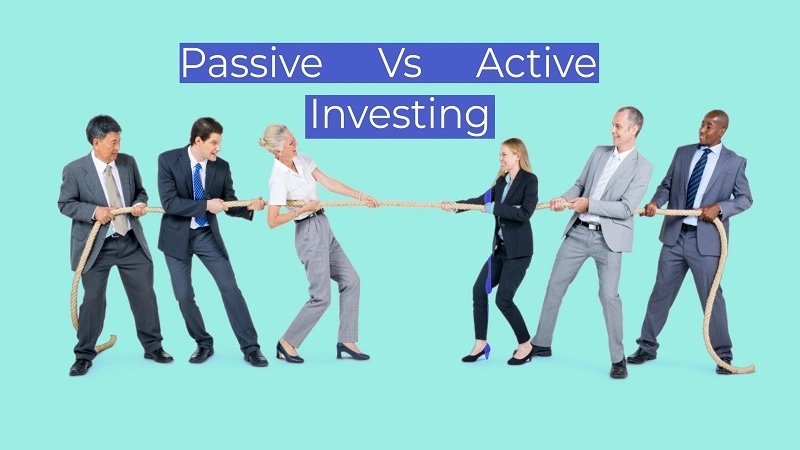
Also, check out - Passive Vs Active Investing
Disclaimer: This blog is presented for informational purposes only and should not be construed as financial advice. Please consult with a qualified financial professional before making any investment decisions.


